Analyze the Greatest Chess Games Ever Played, With an AI Coach
By Chessiro
Last updated July 31, 2026
The best way to judge an analysis tool is to point it at a game whose story you already know. So we loaded in the greatest games ever played.
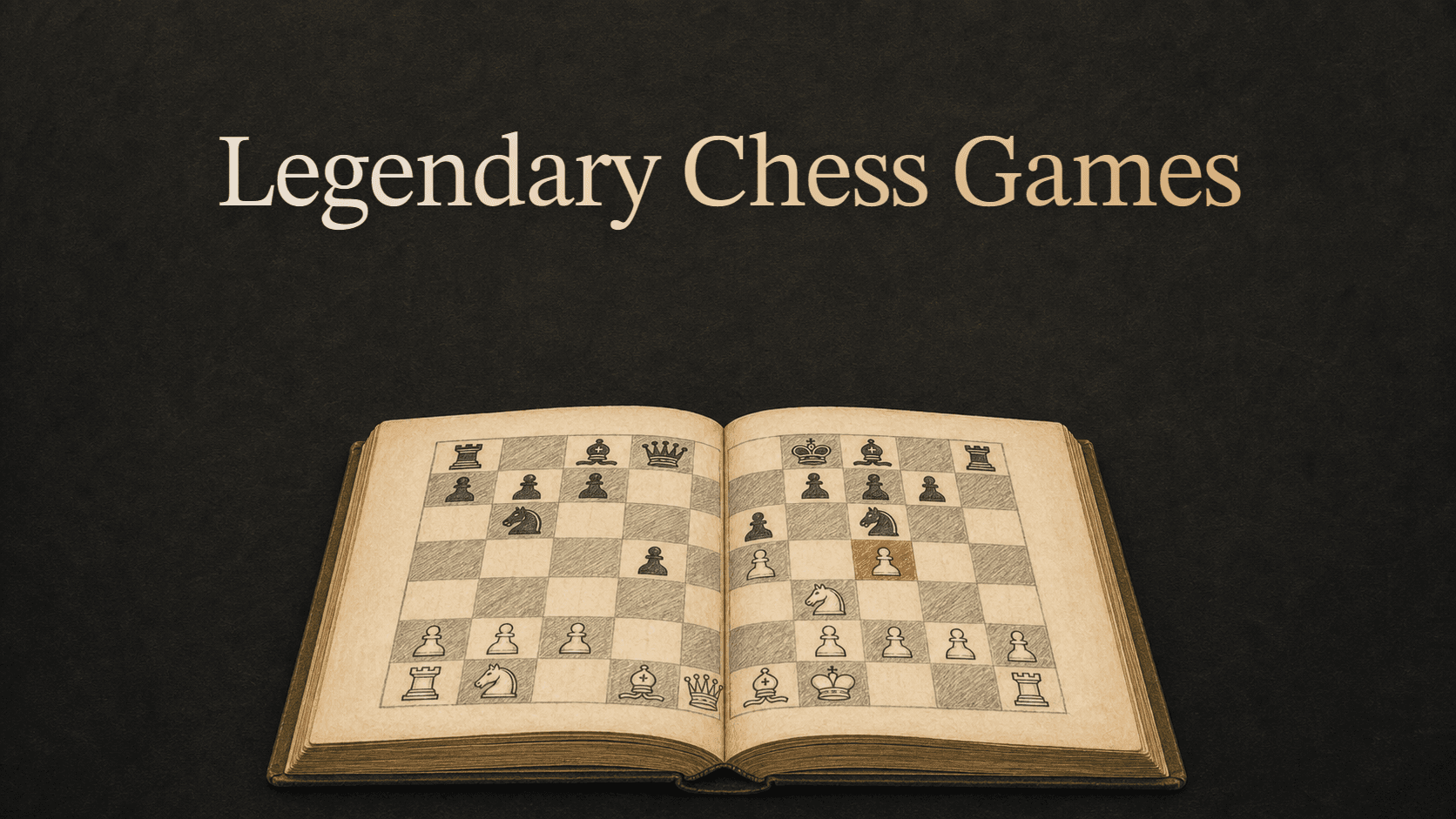
There is a particular frustration in reading an annotated classic. The notes say “and now the combination becomes clear,” and it is not clear at all. You are left knowing that something brilliant happened without being able to explain what.
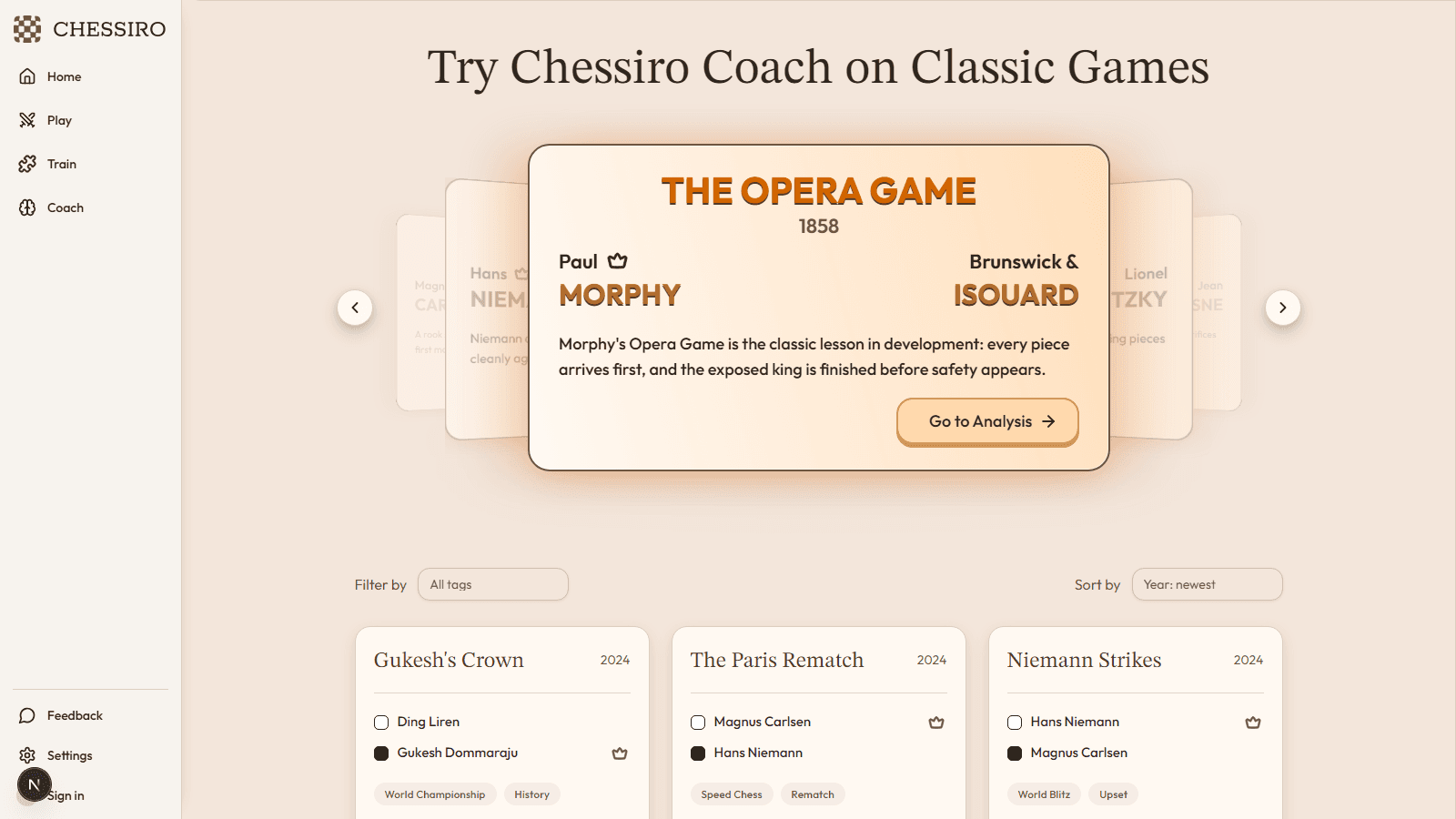
So we put over a hundred famous games into Chessiro and wired them into the same review engine we use for your own games. Every game in the classic games collection opens with full Stockfish 19 analysis, move classifications, an evaluation graph and a coach that explains each move in plain English — and answers follow-up questions when the explanation is not enough.
Why classic games are the best way to test an analysis tool
When you review your own game, you cannot easily tell whether the analysis is any good — you do not know the right answer either. With a famous game you do. You already know Morphy is going to sacrifice his queen. The only question is whether the tool can explain why it works, in language you can use in your next game.
It is also a low-stakes way to learn the interface. There is no sting in seeing a blunder highlighted when the blunder is 170 years old.
Six games worth starting with
The Opera Game
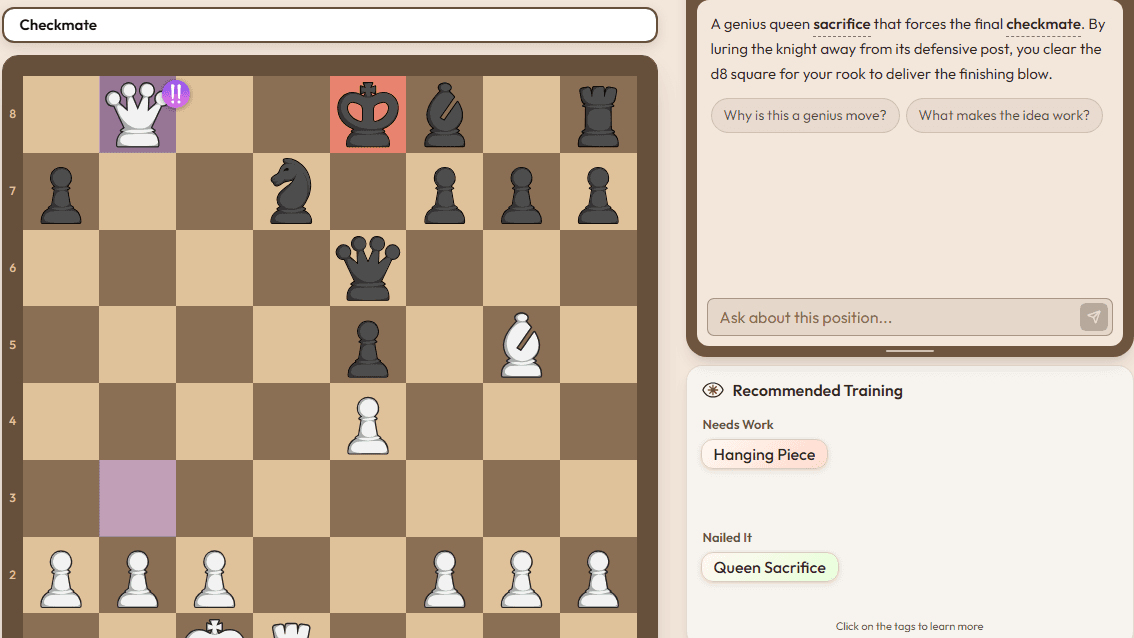
Morphy vs Duke of Brunswick and Count Isouard, Paris 1858. The clearest lesson in development ever played. Morphy brings out every piece with tempo and finishes with a queen sacrifice — a good first test of whether a coach can explain a sacrifice in words rather than just marking it.
The Immortal Game
Anderssen vs Kieseritzky, London 1851. Anderssen gives away a bishop, both rooks and the queen, and mates with three minor pieces. A modern engine disagrees with some of it, which makes the review far more interesting than a clean win would be.
The Evergreen Game
Anderssen vs Dufresne, Berlin 1852. The other Anderssen masterpiece, and the one where the final combination is genuinely hard to see. Worth stepping through move by move with the coach and stopping before the finish to try to find it yourself.
The Game of the Century
Donald Byrne vs Bobby Fischer, New York 1956. Fischer was thirteen. The queen sacrifice on move 17 leads to a windmill that nets far more than the queen was worth — and the eval graph shows exactly when Byrne's position became unsalvageable.
Rubinstein's Immortal
Rotlewi vs Rubinstein, Łódź 1907. If you think you only learn from tactics, this is the antidote. Rubinstein's pieces coordinate quietly for twenty moves before the combination arrives, and the phase breakdown makes that build-up visible.
Lasker's Double Bishop Sacrifice
Lasker vs Bauer, Amsterdam 1889. The origin of a pattern you will meet again: both bishops thrown at a castled king. Once you have seen it explained, you start spotting the setup in your own games.
What the engine says about the old masters
Here is the part people find surprising: several of the most celebrated attacking games contain moves a modern engine does not approve of. The Immortal Game in particular is full of sacrifices that a defender with Stockfish and unlimited time would have refuted.
That does not diminish the games — it makes them more useful. The review shows you both the move played and the defence that was available, and the evaluation graph marks the exact moment the defence stopped being findable over the board. Understanding why a sacrifice was practically winning even when it was not objectively winning is a genuinely advanced idea, and these games teach it better than any puzzle set.
How to actually study one of these
Reading through with the engine on tells you very little. Try this instead:
- Step through the opening and stop at move 10. Ask yourself whose position you would rather have, then check the eval bar — set to plain English if the numbers do not mean much to you yet.
- When you reach a move marked as brilliant, cover the next move and try to find it. Give yourself five minutes; that is longer than the player had.
- When you cannot find it, ask the coach why the move works. It draws the idea on the board, which is usually the moment it clicks.
- Play out your own alternative on the board. The coach explains your variation too, so “why not take with the rook” gets a real answer.
- Note the theme — a deflection, a windmill, a decoy — and go train that pattern while it is fresh.
Then review one of your own
Classic games teach you patterns. They cannot tell you which patterns you keep missing — only your own games do that. The routine we would recommend is one classic and one of your own losses, in that order: the first shows you what good looks like, the second shows you the gap.
Both use the same review. Read the full tour of what is in it, open a classic game, then paste one of your own — free and unlimited, no daily cap.
Frequently asked questions
Can I analyze famous chess games on Chessiro?
Yes. Chessiro includes a collection of over 100 classic games — the Opera Game, the Immortal Game, the Evergreen Game, Fischer's Game of the Century and many more — and each one opens directly in the same full game review you get for your own games, with Stockfish 19 analysis and AI coaching.
Do I need an account to review a classic game?
No. You can open any classic game and step through the review without signing in. An account is what lets Chessiro remember your own games and build training from them.
Does the engine disagree with the old masters?
Sometimes, and that is part of the appeal. Several famous attacking games contain sacrifices a modern engine considers unsound with best defence. The review shows both what was played and what the defence missed, which is usually a better lesson than a game where everything was correct.
Are classic games a good way to improve?
They are excellent for pattern recognition, and they are risk-free practice at reading a position. But they do not tell you about your own weaknesses. The strongest routine is both: study the classics to learn the patterns, and review your own games to find out which patterns you keep missing.

Free game review
Review your games and get actionable insights
Paste a PGN or import your Chess.com and Lichess games, and get a free move-by-move review: every mistake classified, every turning point explained in plain English, with training puzzles built from the exact positions you misplayed.

